The Architecture of 2026: Beyond CMS and "Vibe Coding"

Pixabay © 1841550
Key Takeaway: Sustainable websites need deliberate architecture, performance budgets, security, and human review; a CMS or AI-generated prototype is not a substitute for those engineering decisions.
Relevant to: business owners, web developers, and agencies.
The digital landscape has evolved into a battlefield of efficiency. Users expect instant gratification, algorithms are ruthless, and the "good enough" websites of the past are now considered obsolete. In this environment, the strategy behind your code matters more than the tools you use to build it.
But the allure of drag-and-drop builders and AI-generated code is stronger than ever, relying on them is a recipe for disaster. It's tempting to think that AI has solved web development. Prompt an LLM, get a prototype in minutes. Ship it. Move on. In the end, the companies winning aren't those who coded fastest. They're the ones who coded smartest—with intention, security, and maintainability baked in from day one.
The False Promise of "Good Enough"

WordPress. Squarespace. Wix. Webflow.
These platforms promise simplicity, speed and low barriers to entry. But they come with an invisible cost:
- You are renting, not building. Your data lives on their servers. Your customization ceiling is their roadmap.
- Performance is out of your hands. Bloated with plugins, slow with cruft, you cannot optimize what you don't control.
- Plugin bloat – Every added plugin introduces its own code, CSS, and potential conflicts. Over time, sites become slow, insecure, and fragile.
- Locked design & limited flexibility – You can’t break the grid, customize interactions deeply, or integrate custom logic without hacking around platform restrictions.
- Security is delegated. Updates, patches, vulnerabilities—you hope they stay on top of it. WordPress is a security nightmare if hosted on shared infrastructure.
The Trap of "Vibe Coding"
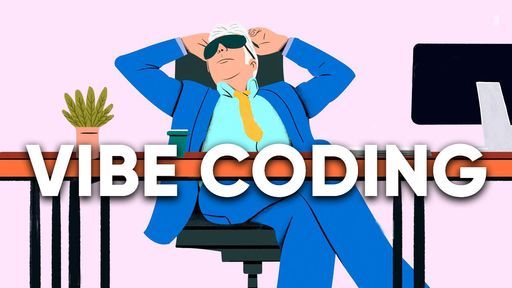
The newest challenger to code quality is the rise of "Vibe Coding"—the practice of prompting an AI to build features based on a feeling or a rough description. While AI is an incredible accelerator for senior developers, using it as a replacement for architectural thinking creates a new kind of technical debt: Spaghetti Code at Scale.
The fundamental issue is context loss. LLMs operate on a limited context window. As an application grows, the AI loses track of the architectural decisions made in prompt #1 when it is generating code for prompt #30.
This leads to disjointed patterns, duplicated logic, and "over-engineered" solutions. AI tends to hallucinate complexity, creating abstract factory patterns for simple tasks or using obscure libraries to solve standard problems. When the code inevitably breaks, debugging becomes a misery. You aren't debugging your own logic; you are debugging the probabilistic output of a model that no longer remembers why it wrote the code that way.
Because vibe‑coded projects rarely include automated tests, these vulnerabilities slip into production. A single breach can cost a small business six figures—far more than investing in clean code from the start.
Without a human hand guiding the structure—ensuring separation of concerns, state management hygiene, and modularity—AI-generated code becomes an opened "Pandora's Box" that is impossible to maintain.
The Human Element
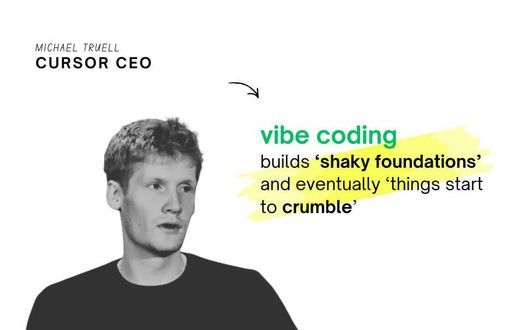
So, how do we win? We stop looking for shortcuts and start valuing the Architect.
The most valuable asset isn't a tool that generates code; it's a developer who understands Clean Code principles. This is someone who knows that naming variables clearly is as important as the algorithms they run. They understand the latest strategies and frameworks not just as syntax, but as tools to solve specific human problems.
This expertise extends directly into User Experience (UX). A clean codebase allows for rapid iteration. When a user flow on a mobile device feels clunky, a clean architect can pivot the UI instantly without breaking the backend. In a world where mobile traffic dominates, understanding how thumbs interact with screens—touch targets, gesture handling, and micro-interactions—is paramount.
Drag-and-drop solutions force you into their design constraints. AI "vibe coding" forces you into its averaged logic. But a human-led, clean code strategy builds a product that serves the business and the user first.
Conclusion

picjumbo © Viktor Hanacek
The year 2026 demands digital experiences that are instant, intuitive, and flawless. You simply cannot achieve this by dragging blocks onto a canvas or by blindly accepting code from an AI chatbot.
The benefits of hiring someone who prioritizes clean, maintainable code are clear:
- Performance: You outrank bloated CMS templates on search engines.
- Maintainability: When bugs appear, they are easy to find and fix even for an AI model, unlike the tangled mess of Artificial Intelligence created hallucinations.
- UX Excellence: You gain a product designed for human behavior, not template constraints.
Don't let the "vibe" dictate your architecture. Invest in strategy. Invest in clean code. Feel the vibe of a good investment!